

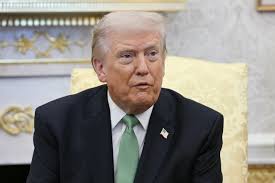
Presid.ent Donald Trump threatened a major strike if Iran ignores his 48-hour ultimatum, but experts say it’s unlikely to change Tehran’s resolve
Tehran has threatened to escalate strikes on energy infrastructure and target critical water desalination facilities should President Donald Trump make good on a promise to “obliterate” the country’s power plants if it does not reopen the Strait of Hormuz.
Trump on Saturday evening gave Tehran a 48-hour deadline to reopen the critical trade route, through which around 20% of the world’s oil passes, threatening in a post on Truth Social to target Iran’s energy infrastructure if the demand is not met.
Iran has effectively blocked the strait since the U.S. and Israel launched their attacks on the country on Feb. 28, sparking swift retaliation from the Islamic Republic and triggering a wider war in the region.
Threats of retaliation
Treasury Secretary Scott Bessent told NBC News’ “Meet the Press” on Sunday that the Trump administration was leaving “all options on the table” when it comes to seeing the strait reopened.
Asked by moderator Kristen Welker whether the U.S. was scaling back the war against Iran or escalating, he said those two things were “not mutually exclusive.”
“Sometimes you have to escalate to de-escalate,” he said.
Tehran on Sunday morning showed no signs of backing down, responding to Trump’s ultimatum with its own threat of retaliation as it vowed to strike U.S. and Israeli infrastructure in the region in response to any attack on its power plants.
“If Iran’s fuel and energy infrastructure is attacked, then fuel, energy, information technology systems and desalination infrastructure used by America and the regime in the region will be struck,” Col. Ebrahim Zolfaqari, spokesman for Iran’s Khatam al-Anbiya military command headquarters, warned on Sunday, according to the IRNA Iranian state news agency.
Desalination, the process of creating drinkable water from seawater, is critical to supplying water across Israel and many of Iran’s Gulf neighbors.
Mohammad-Bagher Ghalibaf, speaker of the Iranian parliament, echoed those threats in a post on X on Sunday, warning that “critical infrastructure, energy and oil across the region will be irreversibly destroyed and oil prices will rise for a long time” if Iran’s power plants are struck.
Trump’s ultimatum came as the war consuming the Middle East entered its fourth week, with Iran targeting a joint U.K.-U.S. base in the Indian Ocean on Saturday, while nuclear sites in both Iran and Israel were attacked.
The Iranian judiciary’s official news agency, Mizan, reported that there was no leakage following the strike on its Natanz nuclear facility.
The International Atomic Energy Agency said that no abnormal off-site radiation levels had been observed following that attack, or from an Iranian strike close to an Israeli nuclear site in Dimona.
‘Limited options’
Ross Harrison, a senior fellow at the Middle East Institute and the author of “Decoding Iran’s Foreign Policy,” said Trump’s threat suggested the president is facing “limited options to open the strait — and I think that may be dawning on him.”
“Unless they completely obliterate all potential for the Iranians to respond, which is, I don’t believe would be the case, military means alone to open the strait probably would not have the desired effect of easing up on the oil markets and on pricing,” Harrison said in a phone interview Sunday.
Trump weighing several options for U.S. troops inside Iran
“The ships are not going to pass, and insurance companies aren’t going to insure ships as long as it’s an active war,” he said.
With Iranian attacks on ships in the area of the Strait of Hormuz effectively closing it off to maritime traffic, oil prices have soared globally, with retail gas prices rising 93 cents per gallon and the price of U.S. crude oil going up more than 70% since the start of the year.
Iran has allowed a small number of vessels to transit through the strait. Ali Mousavi, the country’s representative to the United Nations maritime agency, told China’s state news agency Xinhua on Friday that vessels except those that “belong to our enemies” could seek Tehran’s permission to pass, though Iran has attacked a number of ships that are not American or Israeli.
Source:nbcnews.com/